

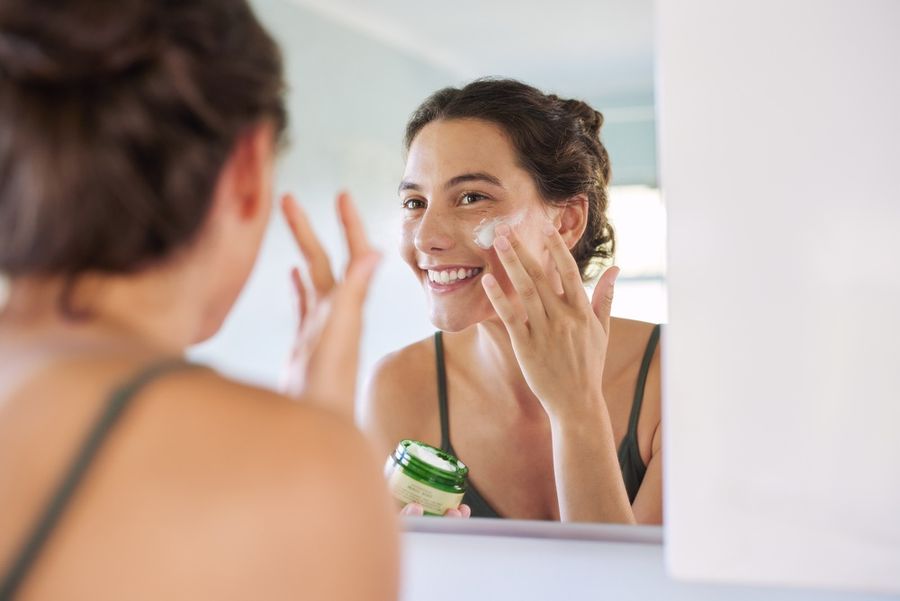
Removing long-wear foundation, waterproof mascara, and layers of sunscreen can take more effort than a quick splash of face wash. Cleansing balms offer a gentler-feeling first step by loosening oily, water-resistant products before they’re rinsed away. Their rich texture can feel especially comfortable on dry skin, but they aren’t automatically necessary for every routine. Knowing how balms work, when double cleansing helps, and which formulas suit your skin can prevent leftover residue, irritation, and unnecessary over-cleansing.
What a Cleansing Balm Is and How It Works
A cleansing balm is an oil-based facial cleanser with a solid or buttery texture. It usually softens as it’s massaged onto dry skin, helping loosen makeup, sunscreen, excess sebum, and other oil-soluble material. Many formulas also contain surfactants or emulsifiers that allow the oily mixture to combine with water and rinse away more easily.
Skin cleansers generally work by emulsifying oil, dirt, and other material on the skin’s surface so they can be removed. A review available through PubMed explains that cleanser ingredients interact with both surface oils and the skin barrier, which is why formula mildness matters. Cleansing balms differ from liquid cleansing oils mainly in texture and packaging rather than basic purpose.
|
Situation |
Is a cleansing balm useful? |
Possible next step |
|---|---|---|
|
Heavy or waterproof makeup |
Often helpful |
Follow with a gentle cleanser |
|
Water-resistant sunscreen |
Often helpful |
Double cleanse if residue remains |
|
Light makeup |
Optional |
One thorough cleanse may be enough |
|
No makeup or sunscreen |
Usually unnecessary |
Use a regular gentle cleanser |
|
Very sensitive skin |
Depends on the formula |
Choose fragrance-free and patch test |
When a Cleansing Balm Is Most Useful
Cleansing balms are particularly useful at night after wearing long-wear makeup, waterproof eye products, or water-resistant sunscreen. Oil-based cleansers can loosen products that may not lift easily with a basic water-based face wash. That can reduce the need for repeated wiping or aggressive scrubbing around delicate areas such as the eyes and lips.
A dermatologist interviewed by the Cleveland Clinic notes that oil-based first cleansers can help remove waterproof makeup and sunscreen. However, double cleansing isn’t necessary for everyone. Someone wearing minimal makeup may find that one gentle cleanser removes everything adequately. Pay attention to whether pigment, sunscreen, or an oily film remains after rinsing rather than adding an extra step simply because it’s popular.
How to Use a Cleansing Balm Properly
Start with dry hands and a dry face unless the product label gives different instructions. Scoop out a small amount, warm it between your fingertips, and gently massage it across the face. Spend extra time where makeup tends to collect, but don’t scrub. The American Academy of Dermatology recommends resisting the urge to scrub while cleansing because friction can irritate the skin.
Next, wet your fingertips and continue massaging. Many balms will turn milky as water activates their emulsifying ingredients. Rinse thoroughly with lukewarm water, paying attention to the hairline, sides of the nose, and jaw. Follow the directions for eye use, since not every product is designed for direct contact near the eyes. Pat the face dry instead of rubbing it with a towel.
Do You Always Need a Second Cleanser?
A second cleanser may help when the balm leaves noticeable residue or when you’ve worn heavy makeup and sunscreen. In a typical double-cleansing routine, the balm removes oily and water-resistant products, while a gentle water-based cleanser removes remaining debris. The second step shouldn’t leave the face tight, squeaky, or uncomfortable.
Double cleansing every night can be excessive for someone who doesn’t wear makeup or water-resistant sunscreen. The Cleveland Clinic warns that washing too much may contribute to dryness and recommends balm-based double cleansing mainly for people who need help removing makeup. Cleansing products can affect the skin barrier, and research emphasizes removing impurities without unnecessarily stripping protective lipids.
Choose a Formula That Fits Your Skin
Dry or normal skin may feel comfortable with balms containing emollients that leave a softer finish after rinsing. Oily or acne-prone skin can also use a balm, but it’s worth looking for a formula labeled noncomedogenic and checking whether it rinses cleanly. The American Academy of Dermatology recommends oil-free and noncomedogenic products for people who are prone to clogged pores, although individual responses can vary.
Sensitive skin may do better with a short ingredient list and no added fragrance. Botanical oils and plant extracts aren’t automatically gentler simply because they’re marketed as natural. The American Academy of Dermatology recommends fragrance-free products for easily irritated skin and notes that reactions can develop even after someone has used a product for a long time. Patch test unfamiliar formulas when sensitivity is a concern.
Avoid Common Cleansing Balm Mistakes
Using too much balm can make rinsing more difficult and encourage unnecessary rubbing. Start with the amount suggested on the package and add more only when needed. Another common mistake is applying a balm with wet hands before it has had time to loosen makeup. Adding water too early may start the emulsifying process before the product has spread across the face.
Watch for persistent cloudiness in the eyes, burning, itching, redness, new congestion, or a heavy film that remains after rinsing. Stop using a product that repeatedly causes discomfort. Cleansers vary in irritation potential, and even formulas promoted as gentle can affect people differently. Recent cleanser research found measurable differences in mildness among commercially available products, reinforcing the importance of choosing based on skin response rather than marketing claims alone.
Let Your Routine Determine the Extra Step
A cleansing balm can make evening cleansing easier when makeup and water-resistant sunscreen are part of the day, but it doesn’t need to appear in every routine. Use enough product to loosen what you’re wearing, rinse it thoroughly, and add a second gentle cleanser only when needed. The right balm should leave skin feeling clean and comfortable, not coated, tight, or irritated.