

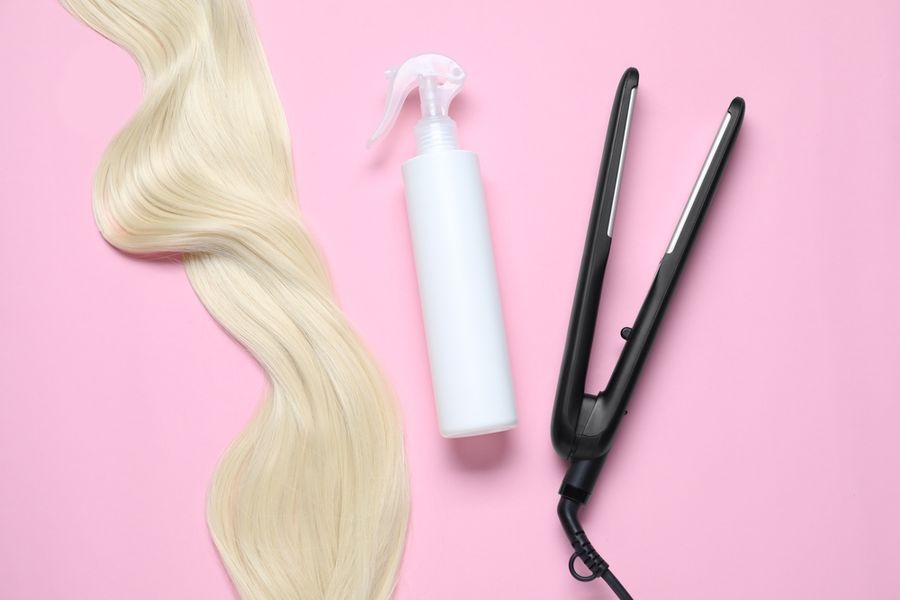
Hot tools can create smooth blowouts, defined curls, and polished styles, but repeated heat can leave hair dry, rough, brittle, and more likely to break. A heat protectant adds a useful layer of defense between fragile strands and high temperatures, though no formula can make unlimited heat harmless. Choosing the right product means looking beyond the front label. Hair type, styling tool, application method, ingredients, and temperature rating all matter when building a routine that protects hair without weighing it down.
Why Heat Styling Can Damage Your Hair
Hair has an outer layer of overlapping cells called the cuticle, which helps protect the inner structure of each strand. Repeated exposure to high temperatures can disturb that surface, reduce moisture, and damage the protective lipid barrier. Over time, hair may feel rougher, look duller, develop more frizz, or break more easily. Recent hair-fiber research found that thermal stress can lift cuticle edges, reduce strength, and increase surface friction.
Flat irons and curling tools create concentrated heat through direct contact. Blow dryers usually spread heat over a wider area, but high temperatures and long drying sessions can still contribute to damage. Chemically lightened, colored, relaxed, or already fragile hair may show signs sooner because its protective structure has already been altered.
What a Heat Protectant Can and Can’t Do
A heat protectant coats the hair with ingredients designed to reduce some of the stress created by hot tools. Film-forming ingredients may help distribute heat more evenly, reduce friction, improve slip, and slow moisture loss. Research into thermal hair protection has examined silicones, conditioning polymers, proteins, oils, and other materials that form protective layers around the fiber. Such coatings can help maintain smoothness and reduce visible damage during styling.
However, heat protectant isn’t permission to use the highest temperature setting every day. No cosmetic product can completely block thermal damage, especially when hair is repeatedly exposed to intense heat. The American Academy of Dermatology recommends using flat irons on dry hair at a low or medium setting and limiting frequent heat styling whenever possible.
What to Look for on the Product Label
Start by looking for a product specifically labeled for thermal or heat protection. A temperature claim can be helpful, but it shouldn’t be treated as a recommended styling temperature. Also check whether the formula is intended for damp hair, dry hair, blow-drying, or direct-contact tools. Clear directions are important because application requirements can vary considerably between products.
A practical heat protectant checklist includes:
- A clear heat-protection or thermal-protection claim
- Directions for damp hair, dry hair, or both
- A lightweight formula suited to your hair texture
- Film-forming silicones or conditioning polymers
- Hydrolyzed proteins or amino acids for added conditioning
- Enough slip to reduce pulling and repeated tool passes
- A spray pattern or texture that supports even coverage
Research reviews suggest protein-based cosmetic ingredients may improve properties such as hair strength, smoothness, and protection, although performance depends on the full formulation rather than one featured ingredient.
Choose a Formula That Fits Your Hair Type
Fine or low-density hair often works best with a lightweight mist that spreads easily without leaving an oily coating. Heavy creams and rich oils may flatten the roots or make fine strands appear greasy. Look for words such as lightweight, weightless, volumizing, or fine-hair friendly. Apply a modest amount through the mid-lengths and ends, where heat-related dryness is often most visible.
Thick, coarse, curly, or highly textured hair may benefit from a cream, lotion, serum, or moisturizing spray that offers both thermal protection and added slip. Dry or chemically processed hair may also respond well to formulas containing conditioning polymers, silicones, proteins, or emollients. Hair needs vary, so pay attention to the finished result. A suitable protectant should help hair feel smoother without creating stiffness, buildup, or a coated texture.
Apply Heat Protectant Evenly and at the Right Time
Coverage matters because a protectant can’t help areas where it wasn’t applied. Divide longer or thicker hair into sections, then distribute the product from the mid-lengths to the ends. Some formulas can be combed through gently for more even coverage. Follow the label rather than assuming every spray or cream should be used in the same way.
Hair should be fully dry before using a flat iron or curling iron unless the tool is specifically designed for wet styling. A study published in the Journal of Cosmetic Science found that heat styling wet hair caused considerably more structural damage than styling dry hair, likely because water evaporated rapidly inside and around the fiber. Allow damp-hair protectants to dry completely before using direct-contact heat.
Pair Heat Protectant With Safer Styling Habits
The lowest effective temperature is usually a better starting point than automatically choosing the tool’s maximum setting. Fine, fragile, bleached, or damaged hair may need less heat than thick, coarse, or resistant hair. Work with small, manageable sections and keep the tool moving rather than holding it against one area. Repeatedly passing over the same strand can add unnecessary thermal and mechanical stress.
Reducing styling frequency also gives hair a break from cumulative exposure. The American Academy of Dermatology advises allowing hair to partially air-dry before blow-drying and decreasing the number of blow-drying sessions each week. Flat irons should only touch dry hair and shouldn’t remain in one place for more than a second or two. Ultimately, heat protectant works best as one part of a broader damage-reduction routine.
Better Protection Starts Before the Tool Heats Up
A good heat protectant should match your hair type, work with your preferred styling tool, and spread evenly without unwanted residue. Look for clear usage directions, thermal-protection claims, and a texture you’ll apply consistently.
It's also best to combine the product with moderate temperatures, fewer passes, and regular heat-free days. Protectant can’t make hot tools risk-free, but thoughtful product selection and gentler styling habits can help hair stay smoother, stronger-looking, and easier to manage.