

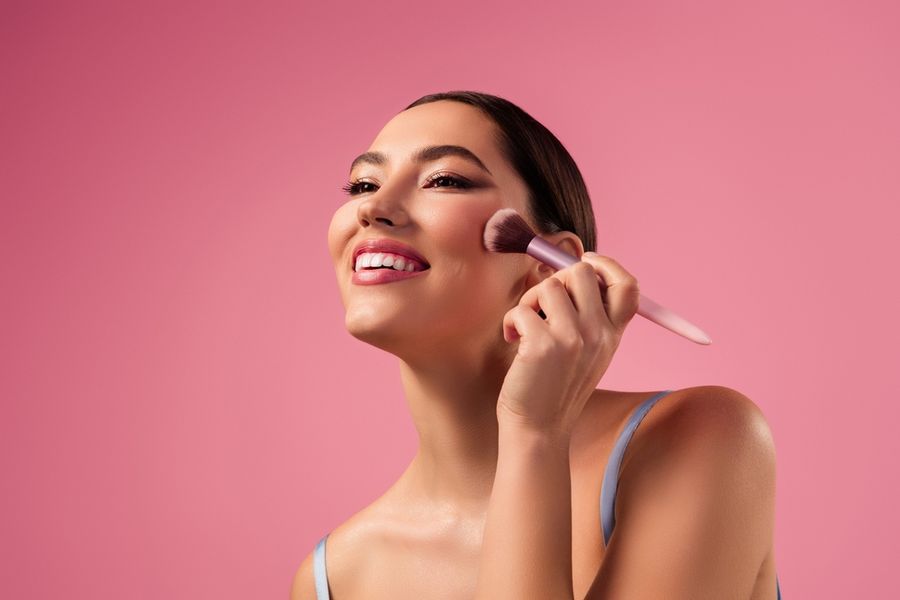
Foundation can look smooth in the morning and turn patchy, oily, or flaky only a few hours later. Separation usually happens when skin texture, excess oil, heavy product layers, or application technique prevents makeup from forming an even film. The solution isn’t always a new foundation. Better skin preparation, lighter layers, and a formula suited to your skin can improve how makeup applies and wears. Luckily, a few small adjustments can create a more even base without adding extra steps.
Why Makeup Separates on the Skin
Makeup separates when the layer sitting on the skin loses its uniform appearance. Foundation and concealer are designed to form a thin cosmetic film, but oil, flakes, uneven texture, moisture, and friction can interrupt that film. Research on cosmetic film deposits shows that a formula’s coverage, thickness, structure, and connection to the skin’s surface can influence how evenly it appears.
The location and appearance of separation may help identify the cause. Flaking around the nose can point to dryness or irritation, while makeup sliding across the forehead may be related to oil or sweat. Small rolled particles often indicate pilling caused by heavy layers, rubbing, or products that haven’t settled. Don’t assume every problem comes from combining “water-based” and “silicone-based” products. Finished cosmetics contain complex blends, so application technique and quantity can matter more than one featured ingredient.
Prepare Dry or Flaky Skin Gently
Dry or peeling skin creates raised edges that foundation can catch on, making coverage look rough or uneven. The American Academy of Dermatology (AAD) explains that dry skin may feel flaky, itchy, or rough and recommends gentle cleansing followed by moisturizer. Choose a comfortable moisturizer that suits your skin rather than applying the richest cream available immediately before makeup.
Also, be sure to give moisturizer time to absorb, then check for a slick or sticky surface. If excess product remains, lightly press it away with a clean tissue instead of adding primer immediately. Be cautious with scrubs or strong exfoliating acids before an important event. The AAD warns that excessive exfoliation can increase dryness and irritation, especially when combined with retinoids or benzoyl peroxide. A calm, consistently moisturized surface usually supports smoother makeup better than aggressive last-minute exfoliation.
Control Oil Without Overdrying Your Face
Oil can mix with foundation pigments and weaken wear, especially around the forehead, nose, and chin. That doesn’t mean oily skin should be stripped with a harsh cleanser or left without moisturizer. Dermatologists at the American Academy of Dermatology recommend gentle cleansing, continued moisturizing, and oil-free or noncomedogenic products for people who experience excess shine.
Use a lightweight moisturizer and sunscreen, then place mattifying primer only where oil usually appears. Applying it across dry cheeks may create a tight or patchy finish. During the day, press blotting paper onto shiny areas rather than rubbing it across the face. After blotting, add a small amount of powder only where needed instead of repeatedly coating the entire face.
Simplify Your Skincare and Makeup Layers
Too many skincare and makeup layers can create a thick, unstable surface. A serum, moisturizer, sunscreen, gripping primer, color corrector, foundation, and powder may each perform well alone but feel heavy when stacked together. Use only the steps your skin needs that day, apply thin amounts, and let each layer settle before moving on. Keep sunscreen in the routine and follow its directions rather than applying too little to prevent pilling. The FDA recommends using sunscreen regularly and as directed.
Pilling doesn’t automatically prove that two formulas are chemically incompatible. Rubbing, applying too much, or layering products quickly can cause cosmetic films to gather into small rolls. Foundations, concealers, and primers are complex systems involving pigments, emulsions, surfactants, evaporation, and film-forming agents. Rather than sorting every product into simple water or silicone categories, test the combination on one part of the face. Remove the step that creates excessive slip, stickiness, or rolling.
Apply Foundation in Thin, Controlled Layers
A thick coat of foundation is more likely to collect around pores, lines, and areas that move throughout the day. Start with a small amount near the center of the face and spread it outward in thin layers. Add coverage only where redness or discoloration remains. Uniform film deposition is important for creating smooth, even-looking coverage, supporting a gradual application rather than one heavy coat.
Use pressing or light stippling motions with a damp sponge, brush, or clean fingertips, depending on the formula. Vigorous rubbing can disturb moisturizer, sunscreen, and primer underneath. Also allow liquid products to set briefly before applying concealer or powder. Place powder strategically with a puff or small brush, concentrating on oily areas and spots that crease. Heavy powder across dry or textured skin may make separation more noticeable instead of securing the base.
Fix Separation Without Adding Heavy Layers
When makeup starts breaking apart, adding more foundation directly over oil or flakes can magnify the problem. First, identify what you’re seeing. Blot excess shine with tissue or oil-absorbing paper, then gently press the remaining makeup back into place with a clean sponge. For a dry patch, apply a tiny amount of moisturizer around the edge and tap carefully instead of rubbing.
Use the following checklist to match the problem with a practical adjustment:
- Patchy and flaky: Reduce powder and improve daily moisturization.
- Shiny and sliding: Blot first, then apply targeted powder.
- Rolling into crumbs: Use fewer layers and smaller amounts.
- Gathering in lines: Apply less foundation and powder.
- Separating in one area: Adjust preparation for that specific zone.
- Stinging or redness: Stop using irritating products and let the skin recover.
Persistent burning, peeling, itching, or redness may signal irritation or an underlying skin condition rather than a makeup problem.
A Smoother Base Starts With Less
Smoother makeup often comes from simplifying rather than adding another product. Prepare the skin according to its current needs, let each layer settle, and apply foundation gradually.
When separation appears, adjust the area causing trouble instead of covering the entire face with more makeup. A lighter routine can help foundation look more even, feel more comfortable, and wear more naturally throughout the day.